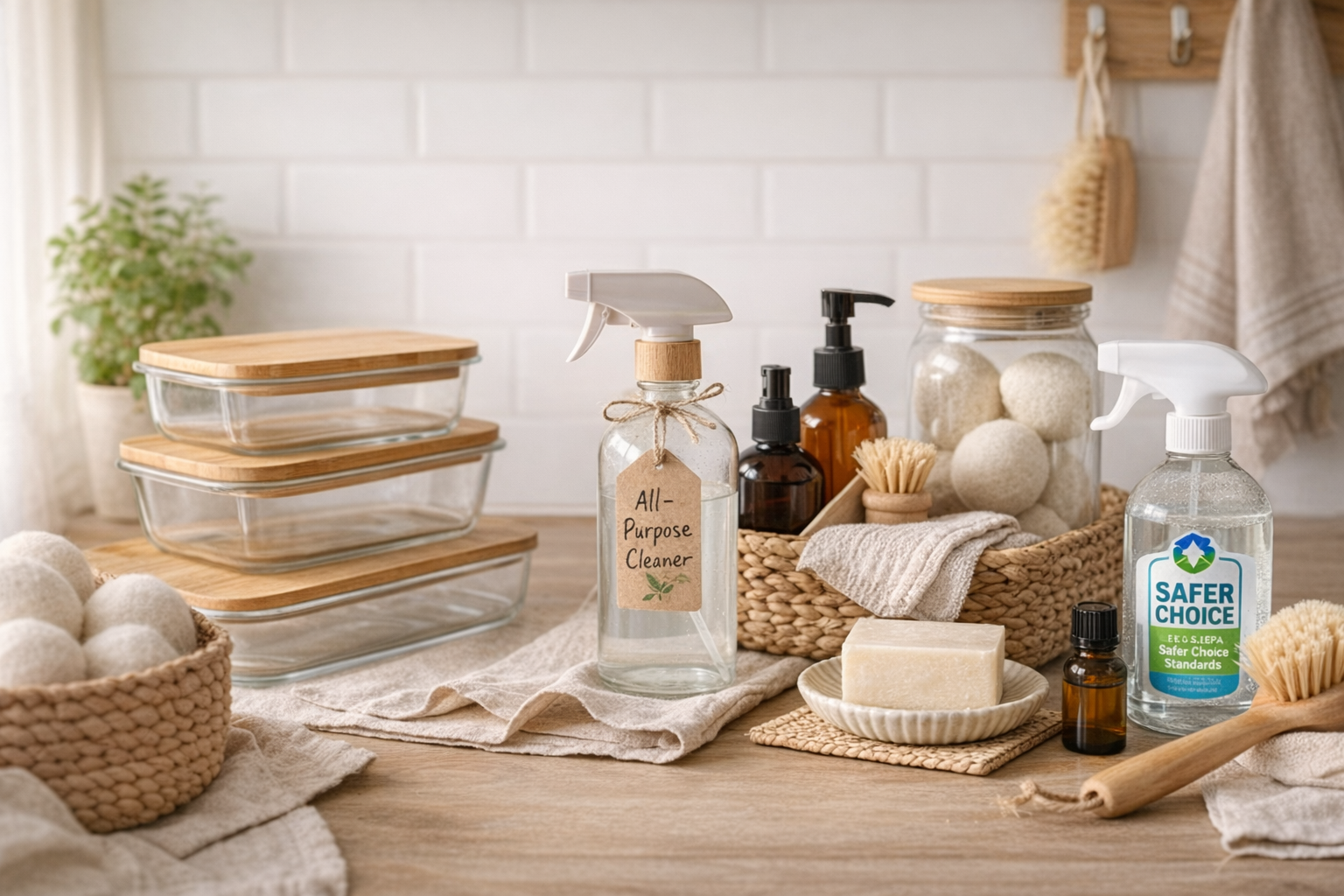
If you've ever tried going "low-tox," you've probably felt this at some point:
Everything sounds important. Everything sounds urgent. And suddenly you're side-eyeing your dish soap like it's plotting against you.
Ronin Mom rule: we don't do panic. We do systems.
This is a low-tox starter kit for real life—especially if you have kids. These are the swaps that give you the biggest win without turning your house into a never-ending renovation project.
(Not medical advice—just practical home choices. Use what fits your family.)
Why Low-Tox Is Worth It (In One Sentence)
Kids breathe faster, play lower, and put their hands on everything—so reducing irritants + residues + indoor air junk is a smart, simple protective move.
A lot of indoor exposure comes from everyday products that release or contain chemicals that can irritate lungs or affect health over time. The EPA notes that many household products can emit VOCs and recommends ventilation and reducing exposure sources.
The 10 Swaps That Actually Matter
1. Go Fragrance-Free in Your Cleaning Products
"Clean smell" is not the same thing as clean.
Many cleaning products release VOCs and other irritants; the American Lung Association points out that cleaning supplies can affect indoor air and that even "natural" fragrances can react indoors and create pollutants.
Ronin version: Pick 1–2 fragrance-free multipurpose cleaners and stop buying the whole aisle.
Easy win: Look for EPA Safer Choice on cleaning products. It's an EPA program that helps identify products with safer ingredients.
Helpful links:
2. Replace Plug-Ins, Sprays, and "Air Fresheners"
This is one of the biggest low-tox "bang for your buck" moves.
If you want better air: remove the source + ventilate. The EPA emphasizes ventilation and reducing indoor pollutant sources as practical steps to improve indoor air.
Ronin replacement:
- Open windows when weather allows
- Run kitchen/bath fans
- Use a simple HEPA air purifier if needed (especially during sickness season)
3. Upgrade Your Laundry: Fragrance-Free Detergent + Skip Softeners
Laundry fragrance clings to clothes and bedding… which means it's right on your kids' skin.
Do this:
- Fragrance-free detergent
- Ditch fabric softener and scented boosters
- Wool dryer balls if you want less static
4. Stop Heating Food in Plastic
If you do nothing else in the kitchen, do this.
NIEHS notes endocrine disruptors can be found in packaging and consumer products, and we encounter them through air, diet, and skin—so reducing exposure where practical is reasonable.
AAP also discusses concerns with common plasticizers and potential health impacts, especially for children.
Ronin replacement: Use glass or stainless for hot food and leftovers.
5. Make One "Kid-Safe" Disinfecting Plan (and Stop Overdoing It)
Clean ≠ disinfected. You don't need hospital-level disinfection all the time.
Ronin approach: Disinfect only when it matters:
- After illness
- Raw meat contamination
- High-touch areas during outbreaks
Then keep your everyday cleaning simple.
Related: For everyday wipe-downs after you simplify cleaners, see reusable organic cotton dish cloths.
6. Ventilate Like It's Part of the Routine
Indoor air can get worse when we seal up homes and add scented products.
The EPA's VOC guidance includes simple steps like increasing ventilation when using products that emit VOCs.
Ronin habit: Crack a window for 10 minutes, run fans when cooking/showering, and don't store strong chemicals inside living areas.
7. Choose "Boring" Personal Care (Especially for Kids)
Kids don't need 12 products. They need simple products, fewer fragrances, fewer extras.
The American Academy of Pediatrics has guidance on reducing chemical exposures from personal care products and choosing safer options for children.
The FDA also notes phthalates can be present in certain cosmetics, which is one reason many families choose simpler, fragrance-free options.
Ronin replacement: Fragrance-free soap, basic lotion, simple shampoo—done.
8. Dust Smarter: Damp Dust + HEPA Vacuum
A lot of what ends up in the body isn't the product itself—it's the dust holding onto residue from lots of sources.
Ronin routine:
- Damp microfiber wipe (not dry feather dusting)
- HEPA vacuum if possible
- Focus on floor zone + baseboards + rugs
9. Nonstick Pans: Replace the Worst Offenders When They're Damaged
If your nonstick is scratched and flaking, that's your sign.
Ronin replacement: Stainless steel / cast iron / enameled cast iron—replace over time, not overnight.
10. Create a "Low-Tox Entryway" (Shoes Off)
Shoes track in outdoor dirt and dust—and research supports measurable soil track-in from footwear.
If you have kids crawling on floors, this is an easy systems win.
Related: A shoe-free landing-zone guide
The 10 Swaps That Can Wait (Save Your Money + Sanity)
These aren't bad—just not where beginners need to spend energy first.
- Replacing every plastic item in your kitchen at once
- Switching every piece of clothing to organic cotton
- Expensive "non-toxic" decor trends (when you could ventilate + simplify)
- Throwing away everything that isn't "clean" on an app
- Buying 10 specialty cleaners instead of 1–2 good basics
- Upgrading your mattress immediately (unless there's a real reason)
- Replacing all candles (start by stopping heavy fragrance first)
- Buying luxury air purifiers before removing obvious irritant sources
- Going fully "zero waste" overnight
- Replacing all toys (focus on habits, not fear)
Ronin Mom principle: progress that sticks beats perfection that collapses.
The Simplest Starter Shopping List
If you want a short list to begin today:
- ✓ Fragrance-free multipurpose cleaner (Safer Choice if possible)
- ✓ Fragrance-free dish soap
- ✓ Fragrance-free laundry detergent
- ✓ Glass containers for leftovers
- ✓ Damp microfiber cloths
- ✓ Doormat + shoe basket
That's enough to create real change without turning this into a full-time job.
Final Word
Low-tox living is not a personality. It's a quiet home system that supports your family.
Start with the high-impact swaps. Build momentum. Don't panic-buy your way into a new form of stress.
Sources (Legit + Non-Influencer)
- EPA: VOCs and steps to reduce exposure (ventilation, reduce sources)
- EPA: Improving indoor air quality (ventilation reduces indoor pollutants)
- EPA: Safer Choice program + product finder
- American Lung Association: Cleaning products + VOCs and indoor pollutants
- AAP: Chemical exposure guidance for personal care products
- AAP: Plasticizers + potential child health concerns
- NIEHS: Endocrine disruptors found in everyday products/packaging
- Research: Footwear track-in (soil transfer indoors)